Emotional Intelligence (EI) is often depicted in four key quadrants: self-awareness, self-management, social awareness, and relationship management. Back in 2017 Google looked at over 100 teams and they found out
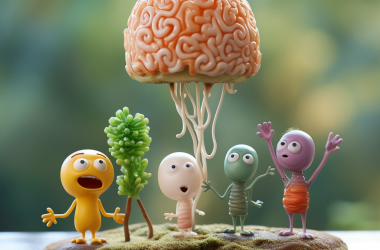
Humor, play, and joy bring the biological spacesuit into a healthier physiology: The physiology of safety and connection. This is the GREEN physiological state, where the smarty pants brain gets
Assessing Imposter Syndrome through an Internal Family Systems (IFS) Lens Thanks to WELCOA’s insightful article Can We (Please) Move Beyond Imposter Syndrome?, I have revisited and updated this post. The
In Project Management, the “PMI way,” we address two type of reserves, the contingency reserve which is the budget set aside to cover potential costs for things that are identified
Special thanks to Violeta Donawa, LMSW, MA, ADS, whose conversations are always so educational and thought provoking. When we first met, we were exploring Havening Techniques® and the conversation led
If we keep talking about “emotional hijacks,” then we will likely keep playing whack-a-mole with our triggers. Typical workplace EI advice for triggers comes as “forewarned is forearmed,” but really
There are different mechanisms for “fast learning” (threat-based learning and novelty-based learning) and “slow/normal learning” (learning without the presence of threat). These types of learning are associated with different neural
Kata coaching refers to a specific coaching methodology based on the concept of kata, which originated in Japanese martial arts. In this context, “kata” refers to a structured practice or
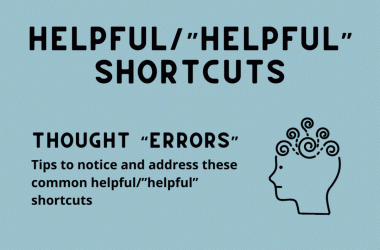
We’ve all experienced those moments where our thoughts seem to be working against us. Cognitive Behavioral Therapy (CBT) often categorizes these as ‘thought errors’ or ‘cognitive distortions.’ But what if
Neuroception is a term introduced by Dr. Stephen Porges, a renowned researcher in the field of neuroscience and psychophysiology. It refers to the subconscious (“behind the scenes”) process through which