At the organization level, strategy is the set of choices about where to play, how to win, and what capabilities to build. The enterprise business model gives up the picture as to how value is created, delivered, and captured given those choices. The enterprise-level business model informs goal and objective setting. Organizational goals and objectives are the WHATs, and organizational strategy is the HOW to achieve those WHATs.
One level down, at the portfolio level, organizations adopt portfolio business models to balance financial performance, social impact, and environmental stewardship with tomorrow’s options for sustainable growth. A portfolio view treats each business model as an individual asset and, at the same time, as part of a connected system that creates value through fit, complementarity, and diversification across the whole enterprise and all three dimensions of the triple bottom line.
Why Portfolio Business Models Are Emerging
Organizations use portfolio business models because leadership teams need a structured way to allocate capital, attention, and talent across multiple bets that behave differently. Many organizations now operate several business models in parallel because markets fragment, technologies advance, and customers expect tailored offerings. Research shows that portfolios allow organizations to diversify revenue streams, explore new opportunities, and redeploy core capabilities into adjacent spaces while staying within a coherent strategic frame. Organizations extend or redeploy core competences across multiple models to reach new customer segments, spread risk, and capture additional rents inside an industry.
Digital technologies strengthen this trend. Data and digital platforms allow organizations to scale multiple models, share assets across them, and combine product, service, and platform logics. At the same time, digitalization increases interdependencies, which raises coordination demands and creates tensions between exploration and exploitation, or between openness and control.
Strategic Intent: Why Each Business Model Might Belong in Your Portfolio
Strategic intent gives a business model portfolio a clear organizing logic by explaining why each model exists. A precise understanding of intent helps leaders decide which models should exploit current strengths, which should explore new opportunities, and how to balance risk, learning, and growth across the portfolio. Research on organizations that operate multiple business models points to three recurring intents that are useful as primary categories: diversifying, sensing, and complementing. Some studies also describe integrative or core models that connect the portfolio, but these describe a structural role rather than an additional intent category.
Diversifying models expand the organization into new markets, customer segments, or usage contexts. The purpose of diversifying models is to access additional revenue pools, spread exposure across different demand conditions, and create options beyond the current core. Diversifying models often tailor value propositions, price structures, and channel arrangements to distinct segments, while still drawing on shared resources or capabilities. Evidence on business model diversification shows that performance gains tend to be higher when new models exhibit demand complementarities with existing ones, such as cross-selling, shared customer journeys, or one-stop-shop effects. Diversifying models therefore work best when they extend the reach of the portfolio while preserving some coherence in the customer base or activity system.
Sensing models operate in uncertain or emerging domains. Think VUCA: Volatility, uncertainty, complexity, and ambiguity. The purpose of sensing models is to probe new technologies, regulatory regimes, user behaviors, or partner ecosystems and to generate structured learning about where future value might arise. Sensing models typically run at limited scale, tolerate high uncertainty, and prioritize information gain over short-term profitability. These models may take the form of experimental digital offerings, pilot platforms, trial subscription schemes, or early participation in nascent ecosystems such as the metaverse or new health-tech configurations. Over time, sensing models can either be scaled and reclassified as diversifying or complementing models, or they can be wound down after they have clarified which strategic paths are unattractive.
Complementing models increase the value of other models in the portfolio by creating synergies and interdependencies. The purpose of complementing models is to deepen relationships with customers, increase switching costs, and strengthen the overall performance of the portfolio rather than maximize standalone profits. Complementing models often add services, data-based offerings, or platforms that connect multiple sides of the market. Examples include subscription layers around transactional businesses, loyalty or membership programs, analytics services built on operational data, or aftermarket service contracts that lock in customers and partners. These models typically share key resources such as communities, data, or technology stacks across the portfolio and rely on redeployment of capabilities rather than entirely new infrastructures.
An integrative role frequently appears around one or a few business models that sit at the center of customer complementarities and traffic flows. The purpose of an integrative model is to knit the portfolio together by aggregating data, interactions, or content and by amplifying network effects. This model can be a diversifying or complementing model in intent but takes on added structural importance. For instance, an e-commerce marketplace can become the integrative model around which advertising, logistics, and cloud services are organized, even if those other models are more profitable on a standalone basis. Integrative models may accept thinner margins or even operate at a loss, while other portfolio elements capture the monetization benefits generated by higher engagement and cross-use.
A useful practical step is to map each existing and proposed business model against its dominant strategic intent. This mapping should specify for each model its primary revenue logic, focal customer or user group, dependence on shared assets, and role in learning or lock-in. Diversifying models will appear as entries into new demand spaces or geographies, sensing models as structured experiments around emerging opportunities, and complementing models as extensions that reinforce or connect existing offerings. The same map can highlight integrative models by identifying which ones generate the densest pattern of customer complementarities, cross-selling, and data flows.
A structured map of intents helps identify imbalances and gaps in the portfolio. A portfolio dominated by diversifying models may generate growth but expose the organization to coordination problems and diluted learning if interdependencies remain weak. A portfolio dominated by complementing models may deepen existing advantages while leaving the organization underexposed to future shifts in technology or demand. A portfolio with very few sensing models may perform well in the short term but lack options if core markets change. The map also reveals whether integrative models are overburdened or underdeveloped, which can influence resilience and imitation barriers. Managers can use this analysis to adjust the mix of models, to adjust governance and resource access, and to decide which models to scale, adapt, or exit.
In many industries, portfolios of business models take recognizable patterns that combine these intents. Market-portfolio patterns appear when organizations operate distinct models for different segments or geographies under a shared brand and infrastructure. Product-portfolio patterns arise when organizations use several models for different product categories or usage contexts. Multi-sided platform patterns emerge when a central platform model connects several complementing and diversifying models on different sides of the market. Sequential portfolio patterns appear when models are introduced and withdrawn over time as technologies and markets evolve, while core competencies and assets are extended or redeployed across successive models. Across these patterns, the underlying intents of diversifying, sensing, and complementing still provide a consistent way to reason about why each model belongs in the portfolio.
Viewing the Portfolio as a System of Interdependencies
A portfolio business model perspective treats interdependencies as design variables rather than side effects. Studies distinguish between complexity within a single model and complexity between models. Links arise from shared activities, shared partners, shared technologies, or shared data. Some links create synergies, such as shared platforms that reduce cost and speed up innovation. Other links create constraints, such as competing claims on scarce capabilities or brand confusion in the eyes of customers.
Research points out that higher portfolio complexity can create imitation barriers and strategic advantages, as competitors struggle to replicate tightly interwoven activity systems. To benefit from this advantage, the organization needs a structure that matches the level and pattern of interdependencies, for example through appropriate centralization or decentralization of decisions and through dedicated integrator roles.
Structuring Governance Across Levels
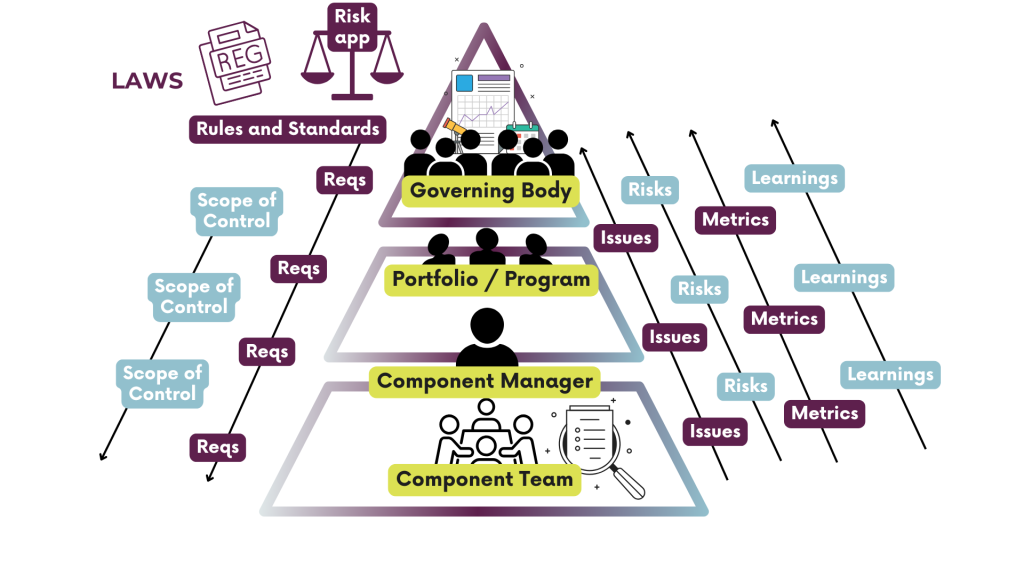
Effective portfolio management connects corporate strategy, the business model portfolio, tactics, and operations through formal control mechanisms. One stream of work decomposes decision-making into these levels and defines clear tasks and objectives at each one. At the organizational level, leaders define long-term goals (qualitative), overall positioning, and risk appetite. They break down goals into organizational objectives (quantitative). They then come up with a strategy to achieve organizational objectives and goals. Strategy is the broad approach or broad course of action to achieve objectives.
Here are a couple of images from D.R.I.V.E. Success™ to illustrate the direction and then the route. (The “D” and “R” in D.R.I.V.E.).
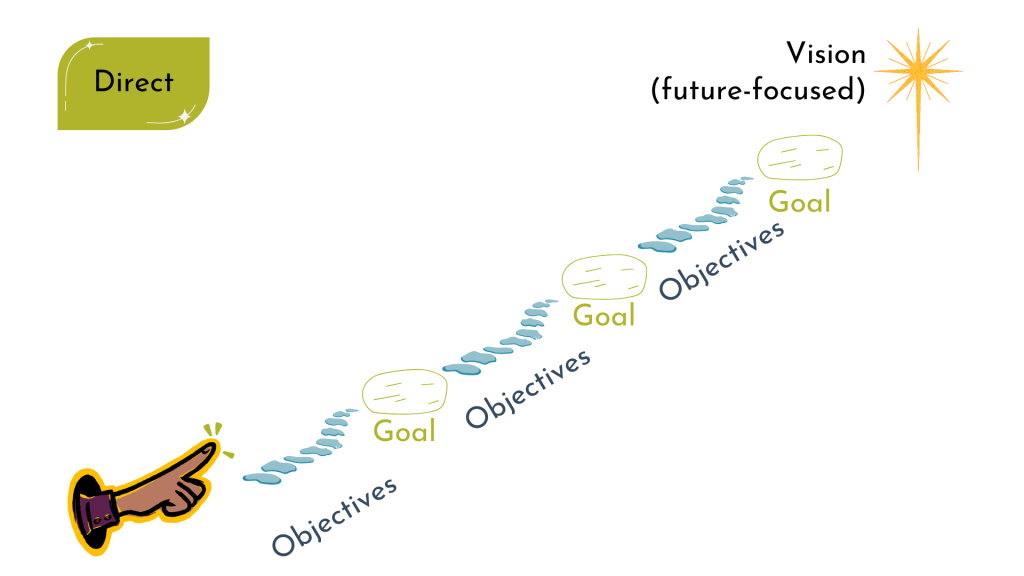
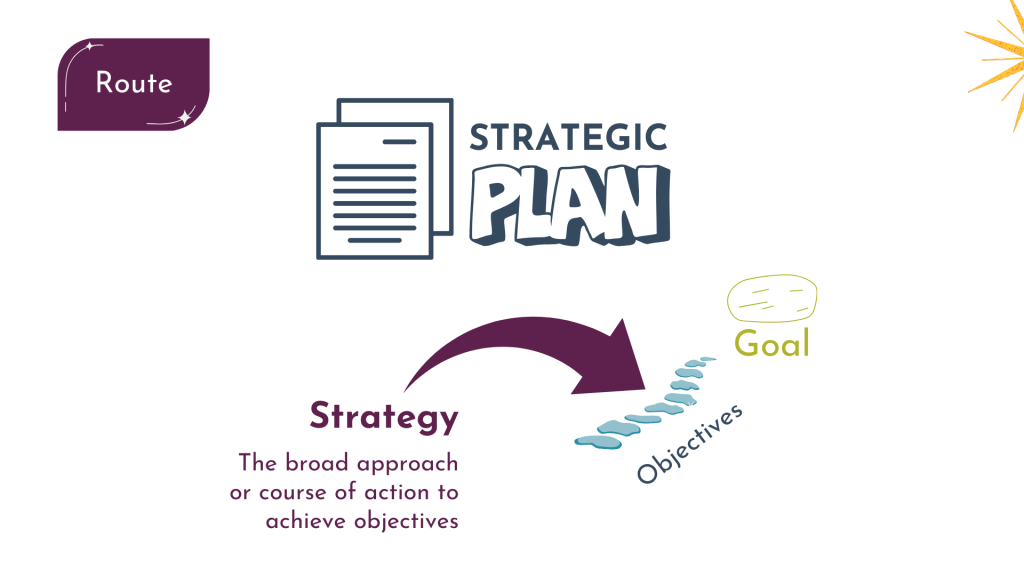
The Strategic Plan will get subdivided into concepts… One of which may be the concept for a portfolio.
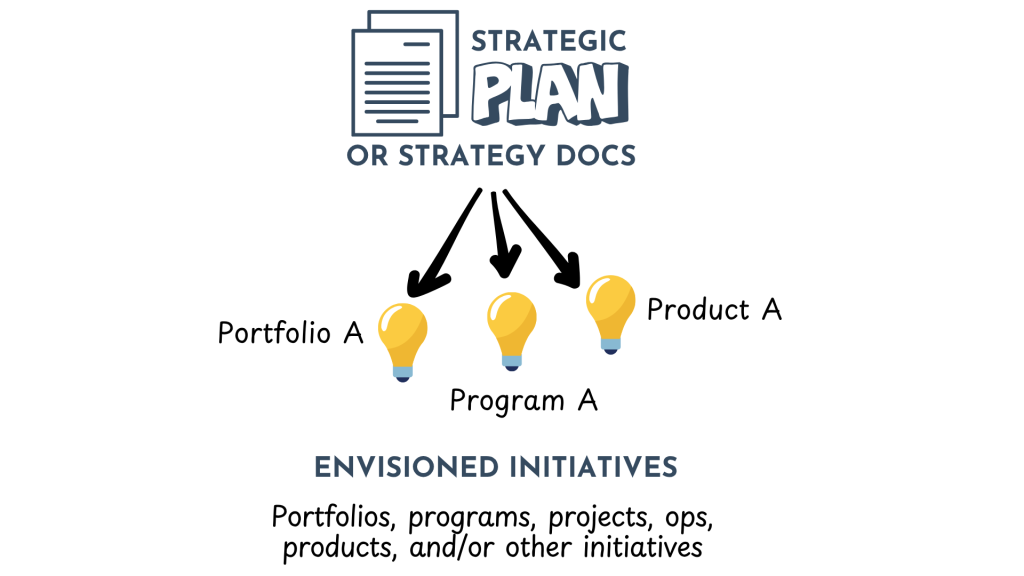
At the portfolio level, leaders choose the mix of business models, their target roles, and their resource envelopes. A resource envelope is the fixed set of resources that a portfolio has available for a given time period (within stated constraints). The envelope typically includes budget, headcount, contractor capacity, leadership attention, tooling, and time, and it reflects any limits such as hiring freezes, spending caps, skill mix, regulatory requirements, or delivery windows. People use the term because prioritization becomes concrete when the total “available capacity” is explicit. Leaders can then compare demand against supply, decide what fits inside the envelope, and defer, descale, or stop work that pushes the organization beyond what it can realistically fund and execute.
At the tactical level, managers align value propositions, revenue logics, and partnerships within each model. Tactics are the means by which a strategy is enacted. From an organizational and portfolio perspective, projects are tactical. Additionally at the operations level, teams optimize processes and local experiments.
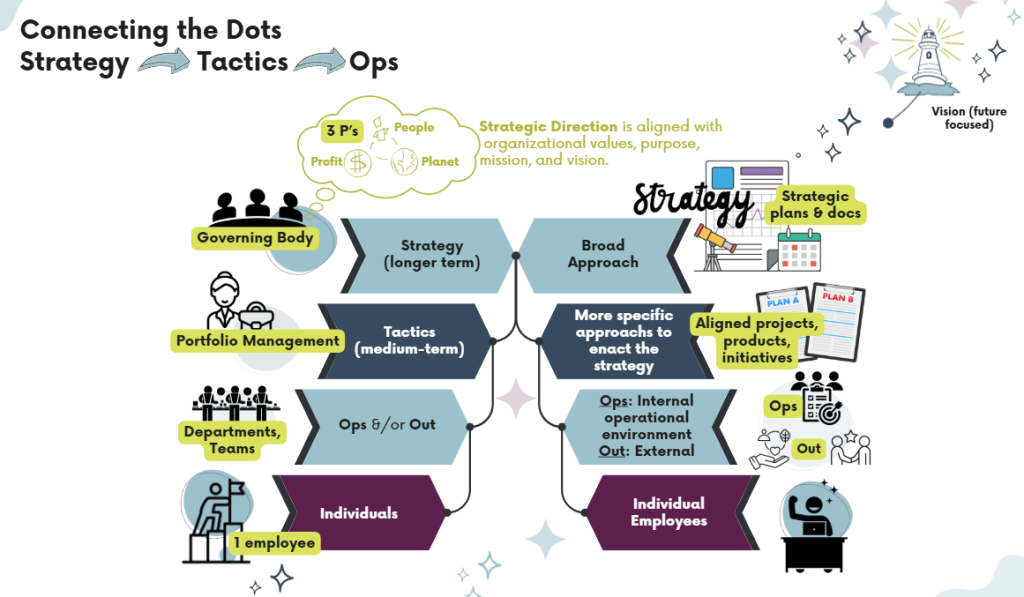
Formal control loops link these levels. Top-down mechanisms translate strategic objectives into portfolio targets, key performance indicators, and guardrails on acceptable risk or cannibalization. Bottom-up mechanisms escalate signals from operations and individual business models to the portfolio and strategy levels when environmental changes cross defined thresholds. This structure supports applicable flexibilities and freedoms within guardrails and rules.
Evaluating and Selecting Business Models for the Portfolio
Portfolio business models call for systematic evaluation methods that compare alternatives across consistent criteria. Research proposes analytic approaches that treat each business model as a unit of analysis, rated on internal and external dimensions. Internal dimensions can include fit with capabilities, operational feasibility, and resource requirements. External dimensions can include customer value, market potential, and competitive intensity.
One stream uses multi-criteria decision-making methods to combine subjective assessments from employees with structured customer input. Scores then map business models into a portfolio matrix, which guides choices on which models to scale, which to experiment with further, and which to sunset. This makes evaluation repeatable and transparent and supports continuous portfolio adjustment.
Managing Portfolio Trajectories Over Time
A portfolio business model is dynamic. Research on portfolio trajectories highlights two key dimensions: inter-business-model complementarity and intra-business-model complexity. Inter-business-model complementarity describes how strongly models support one another through shared assets, cross-selling, or data flows. Intra-business-model complexity captures how intricate each model is in terms of activities, partners, and technologies.
A tool based on these dimensions helps management understand when a portfolio has become overloaded, when complementarity lags behind opportunity, or when splitting entities or recombining units can unlock adaptability. Case evidence shows that deliberate restructuring of portfolios along these lines can create more focused and agile organizations that can pursue distinct growth paths with clearer governance.
Balancing Exploration and Exploitation in the Portfolio
A portfolio view supports the balance between exploiting established businesses and exploring new ones. Research on business development and innovation management suggests using explicit “explore” and “exploit” zones in the portfolio. Explore zones track early-stage business models with emphasis on design, testing, and learning. Exploit zones track mature models with emphasis on scale, efficiency, and incremental improvement.
This distinction guides resource allocation, performance metrics, and decision speed. Explore models may get staged funding, learning-based milestones, and more autonomy. Exploit models may face tighter financial targets and standardized processes. The portfolio view then becomes a tool to stage concepts from explore to exploit, or to retire them, based on evidence.
Supporting Sustainability and Knowledge Transfer Through Portfolios
Business model portfolios also support sustainability transitions. Studies on corporate sustainability transformation show that adding sustainable business models to a portfolio can provide environments where knowledge transfers between old and new logics. Portfolio structures that enable interaction among units support capability building for sustainability, such as new measurement systems, circularity practices, or stakeholder engagement routines.
The effectiveness of these transitions depends on how knowledge flows between the source units and recipients. Individual-level roles and incentives influence whether sustainable models remain isolated or whether their practices diffuse across the portfolio. Designing formal and informal mechanisms for knowledge transfer therefore becomes a central part of portfolio management.
Integrating Digitalization and Portfolio Thinking
Digitalization interacts strongly with portfolio business models. Conceptual work on digital business model portfolios suggests that organizations need to consider the digital maturity and strategic role of each model. Some models digitize internal processes, others add digital services on top of physical offerings, and some become fully digital platforms.
A portfolio lens helps management decide where to prioritize digital investment, how to orchestrate shared data and technology platforms, and how to manage attention between traditional and digitalized models. This often involves explicit plans, routines, and integration templates that guide implementation and maintain focus during long transformation journeys.
Triple Bottom Line Considerations
The easiest way to describe the triple bottom line is: people, planet, and profit. You may also see it as:
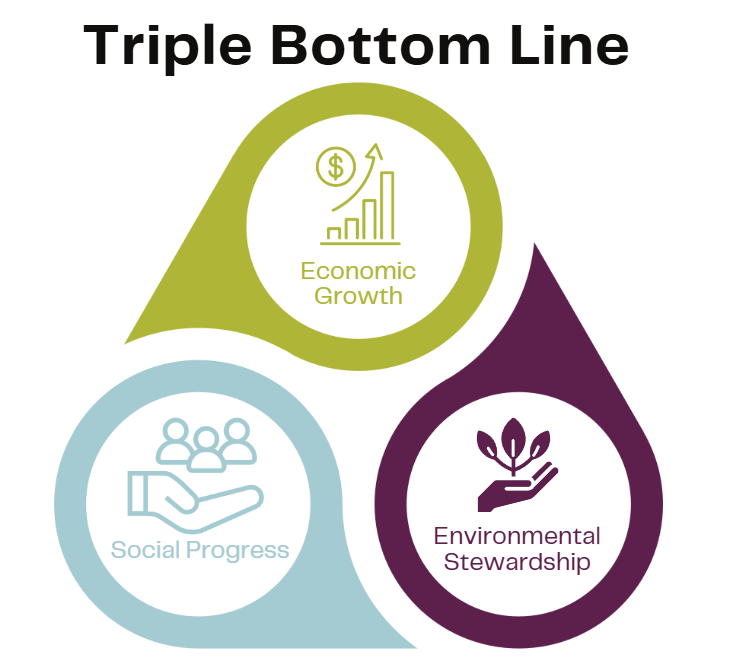
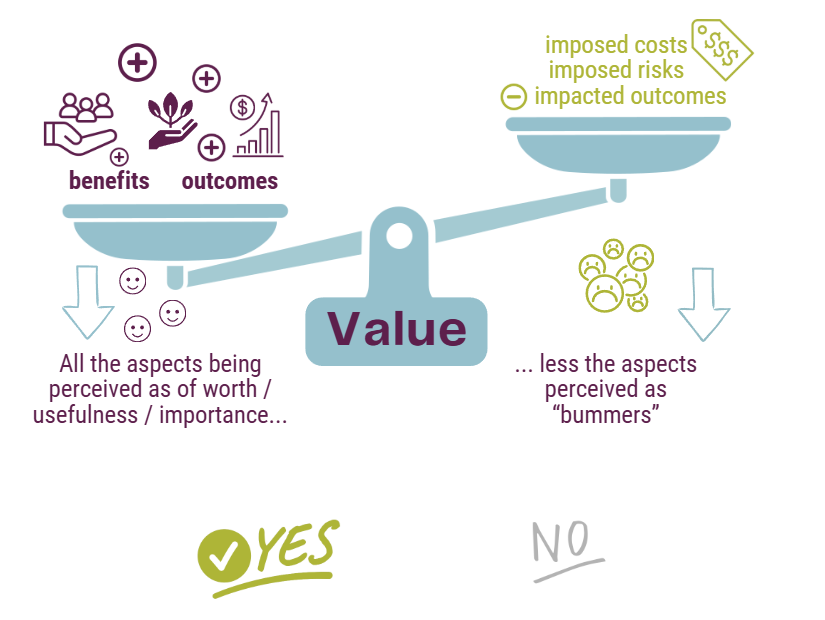
Business models that consider the triple bottom line adopt a broader definition of value. The triple bottom line frames performance along three dimensions: economic viability, environmental stewardship, and social well-being. Sustainable business models integrate these three dimensions into how they create, deliver, and capture value, rather than treating environmental and social outcomes as side effects of financial performance.
One approach uses structured design tools to embed the triple bottom line into business model thinking. The triple-layered business model canvas extends the traditional, economically focused canvas with an environmental layer based on lifecycle thinking and a social layer based on stakeholder perspectives. The environmental layer maps material and energy flows, emissions, and resource use across the product or service lifecycle. The social layer maps stakeholder relationships, labor conditions, community impacts, and issues such as equity and inclusion. This structure helps teams formulate business models that generate multiple forms of value and exposes trade-offs and synergies across the three dimensions.
Empirical applications of the triple-layered business model canvas show how organizations translate triple bottom line concerns into concrete configurations. In manufacturing contexts, organizations have used it to guide transitions from traditional models toward sustainable ones by adding sustainability practices, evaluating their environmental, economic, and social feasibility, and revising the value proposition accordingly. Digital technologies and Industry 4.0 capabilities support these efforts by providing more accurate impact assessments of processes, which then feed back into business model redesign. Sector-level studies, such as in agri-food, demonstrate that the canvas can represent sustainability goals both at industry and organization level and help identify where to innovate for improved environmental protection, economic resilience, and social fairness.
Research on sustainable business models clarifies that the triple bottom line is both an aspiration and a source of design tension. Sustainable business model archetypes group recurring patterns such as maximizing material and energy efficiency, creating value from waste, substituting with renewables, delivering functionality rather than ownership, adopting stewardship roles, encouraging sufficiency, re-purposing business for societal or environmental benefit, and developing scale-up solutions. These archetypes connect specific mechanisms with triple bottom line objectives and offer a shared vocabulary for innovation. However, evidence from certified purpose-driven companies suggests that many sustainable business models still tend to prioritize one dimension over the others, especially in economically oriented archetypes, and that achieving balanced performance across economic, environmental, and social dimensions remains difficult.
Tools that explicitly link stakeholder materiality and business model design deepen the integration of the triple bottom line. Materiality matrices identify which environmental, social, and governance issues matter most to stakeholders and to the organization. When connected to sustainable business model archetypes and triple-layer canvases, these matrices guide choices about which sustainability issues to incorporate into the value proposition, value creation activities, and revenue and cost structures. This alignment helps organizations understand how their business logic generates triple bottom line impacts for different stakeholder groups and clarifies how changes in the model alter those impacts over time.
Recent work on digital-sustainable business models shows that digitalization and the triple bottom line interact at the strategic level. Digital technologies can enhance representation, connectivity, and recombination of resources, which in turn can support environmental monitoring, circular flows, and inclusive access to services. At the same time, research highlights tensions between economic performance, environmental goals, and social outcomes and calls for more study of complementarities and conflicts across the three dimensions. A growing stream of work on sustainable business model implementation in industry synthesizes these insights and emphasizes that organizations need to reframe their purpose, redesign their activity systems, and coordinate stakeholders if they aim to balance economic, environmental, and social value in practice.
Practical Design Principles for Portfolio Business Models
Empirical and conceptual research converges on several design principles for portfolio business models in enterprises:
- Start from strategic orientation and define the target mix of growth, risk, and time horizons across the portfolio.
- Treat each business model as a distinct entity with a clear role, intent, and evaluation metrics.
- Map interdependencies and deliberately design synergies and boundaries between models.
- Align organizational structure and decision rights with portfolio complexity and complementarity.
- Use formal control frameworks to connect strategy, portfolio choices, and operational adaptation.
- Apply systematic, multi-criteria evaluation methods for selection, scaling, and retirement decisions.
- Maintain distinct regimes for exploration and exploitation within the portfolio.
- Build mechanisms for knowledge transfer, especially when adding sustainable or digital models.
In summary, portfolio business models are tools that combine strategic clarity, analytical rigor, and organizational design into a coherent approach for multi-business enterprises.
References
- The business model portfolio as a strategic tool for value creation and business performance — Peter Westerveld, Erwin Fielt, Kevin C. Desouza, Guy G. Gable
- Strategically Managing the Business Model Portfolio Trajectory — Yuliya Snihur, Llewellyn D. W. Thomas, Robert A. Burgelman
- Towards successful business model management with analytic network process-based feasibility evaluation and portfolio management — Kwanyoung Im, Ki-Eun Nam, Hyunbo Cho
- Corporate Sustainability Transformation: Exploring the Role of Knowledge Transfer in Business Model Portfolios — Terje Berntsen
- Building a Winning Business Model Portfolio — Paolo Aversa, Stefan Haefliger, Dan G. Reza
- More can be better: operating multiple business models in a corporate portfolio — Kirstin E. Bosbach, Anne-Sophie Brillinger, Björn Schäfer
- Bridging strategic planning and business model management – A formal control framework to manage business model portfolios and dynamics — Dietfried Globocnik, Rita Faullant, Zulaicha Parastuty
- Portfolio management for business development — C. Rink
- From business model to business model portfolio in the European biopharmaceutical industry — Valérie Sabatier, Vincent Mangematin, Tristan Rouselle
- Knowledge- and innovation-based business models for future growth: digitalized business models and portfolio considerations — Ricarda B. Bouncken, Sascha Kraus, Norat Roig-Tierno
- Managing complexity in a multi-business-model organization — Yuliya Snihur, Juan Pablo Tarziján
- The triple layered business model canvas: A tool to design more sustainable business models — Alexandre Joyce, Raymond L. Paquin
- Enhancing Sustainability with the Triple-Layered Business Model Canvas: Insights from the Fruit and Vegetable Industry in Spain — S. Merino, T. Lozano
- Sustainability Transition in Industry 4.0 and Smart Manufacturing with the Triple-Layered Business Model Canvas — F. García-Muiña, M. Medina-Salgado, A. Ferrari, M. Cucchi
- A literature and practice review to develop sustainable business model archetypes — Nancy M. P. Bocken, Samuel W. Short, Padmakshi Rana, Steve Evans
- The sustainability performances of sustainable business models — Daniel Alonso-Martínez, Valentina De Marchi, Eleonora Di Maria
- Materiality Matrix Use in Aligning and Determining a Firm’s Sustainable Business Model Archetype and Triple Bottom Line Impact on Stakeholders — Valeska V. Geldres-Weiss, Nicolás Gambetta, Nathaniel P. Massa, Skania L. Geldres-Weiss
- Digital-sustainable business models: Definition, systematic literature review, integrative framework and research agenda from a strategic management perspective — Maximilian Palmié, Andreas Aebersold, Pejvak Oghazi, Natallia Pashkevich, Oliver Gassmann
- Sustainable Business Models Implementation in Industry — Suhaila Abdalla Merghani
- Customer complementarity in the digital space: Exploring Amazon’s business model diversification — Pierpaolo Aversa, Stefan Haefliger, Francesca Hueller, Danielle G. Reza
- Business model diversification and firm performance: A demand-side perspective — Timo Sohl, Gerard Vroom, Brian McCann
- The digital transformation of business models in the creative industries: A holistic framework and emerging trends — Feng Li
- Business model diversification in the sharing economy: The case of GoMore — Hugo Guyader, Laura Piscicelli
- Leveraging Business Model Components as Drivers of Business Model Portfolios — Wolfgang Sachsenhofer
- Pathways to digital business models: The connection of sensing and seizing in business model innovation — Tim Böttcher, Julian Weking, Alexander Hein, Marco Böhm, Helmut Krcmar
- Sensing the Metaverse: The microfoundations of complementor firms’ dynamic sensing capabilities in emerging-technology ecosystems — Christian Zabel, Daniel O’Brien, Jonathan Natzel
- Exploring business models for managing uncertainty in healthcare, medical devices, and biotechnology industries — Ehsan Javanmardi, Petra Marešová, Naiming Xie, Rafał Mierzwiak