The biological spacesuit (body) comes with a handy Feather-O-Meter™. There are 3 main physiological states: GREEN, YELLOW, and RED.
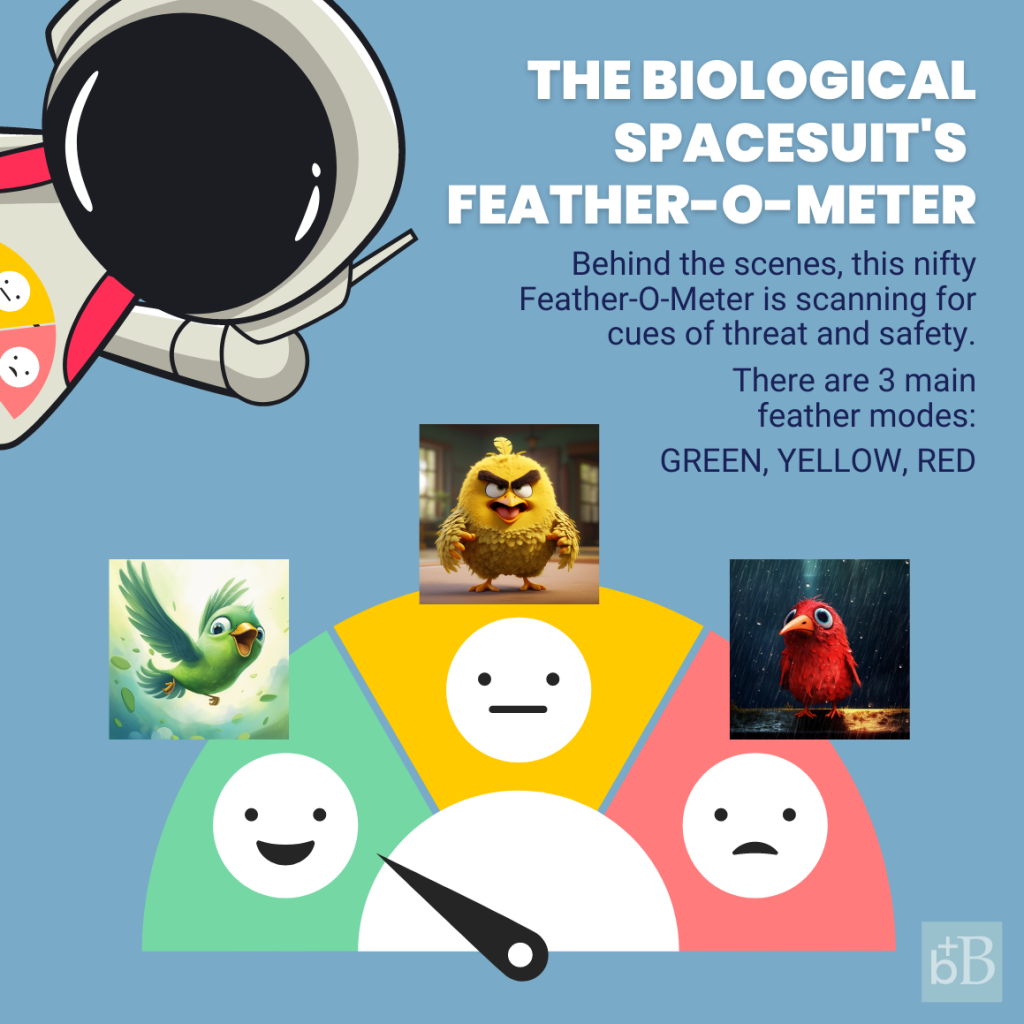
But first, it’s important to know there are no bad states. These states help us stay alive and thrive (in that order). In a healthy, typical nervous system we are smoothly moving through all these states throughout the day. Just like when driving at night, we need to have the headlights on to (A) stay safe and (B) get to where we want to go (thrive and have adventures).
From the training The S.E.C. Check™ via knowledgecompounding.com
Each state has its own helpful/“helpful” properties that affect how we think and feel. The S.E.C. Check™ can be used throughout the day!
- S (Somatic): What is going on in my body? (Tense or relaxed, sensations, energies)
- E (Emotions, etc.): What emotions and feelings am I experiencing?
- C (Cognitions): What kinds of thoughts am I having?
Next… CHECK: What physiological state am I in? GREEN, YELLOW, RED, or a blend?
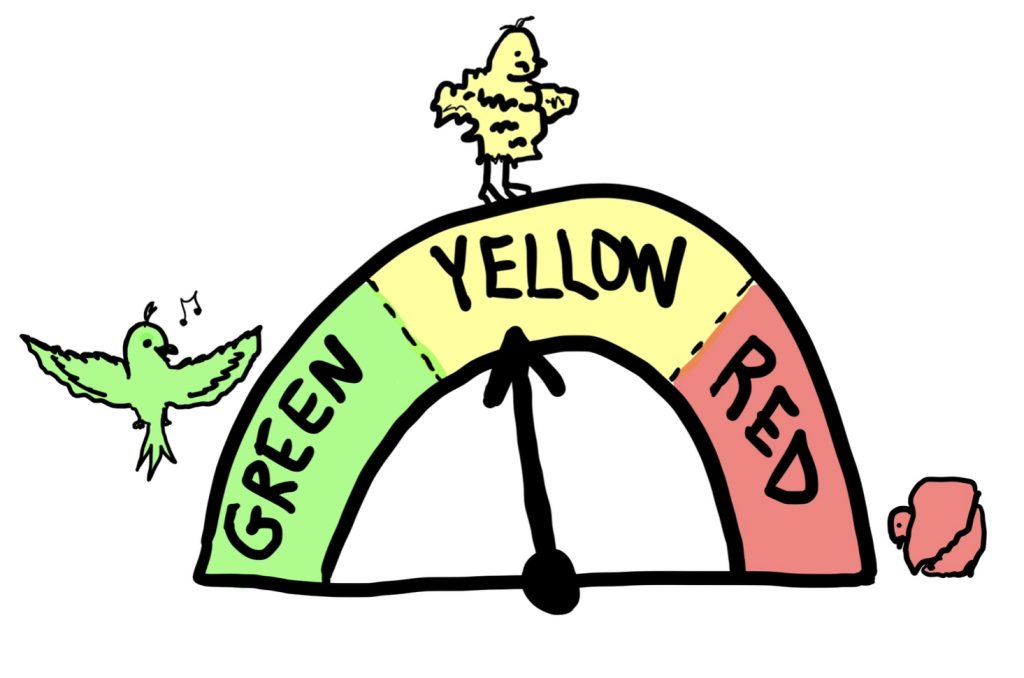
Safe: GREEN (Ventral Vagal)

Hold up 2 peace signs!

VV = ventral vagal
The first state, GREEN (ventral vagal), is associated with feelings of safety and connection. It allows for regulation, organized thinking, creativity, communication, connection, and reciprocity. GREEN helps with long-term survival.
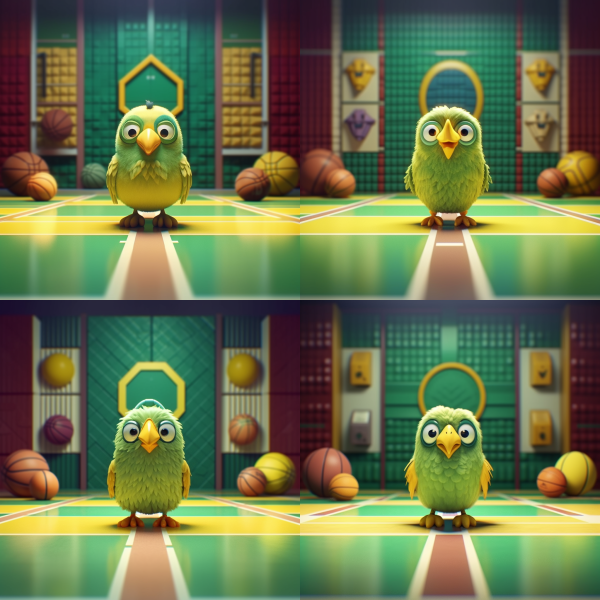
Safe: Blended State GREEN-YELLOW
(The safety and connection of GREEN, plus some mobilization; e.g. sports and playing around)
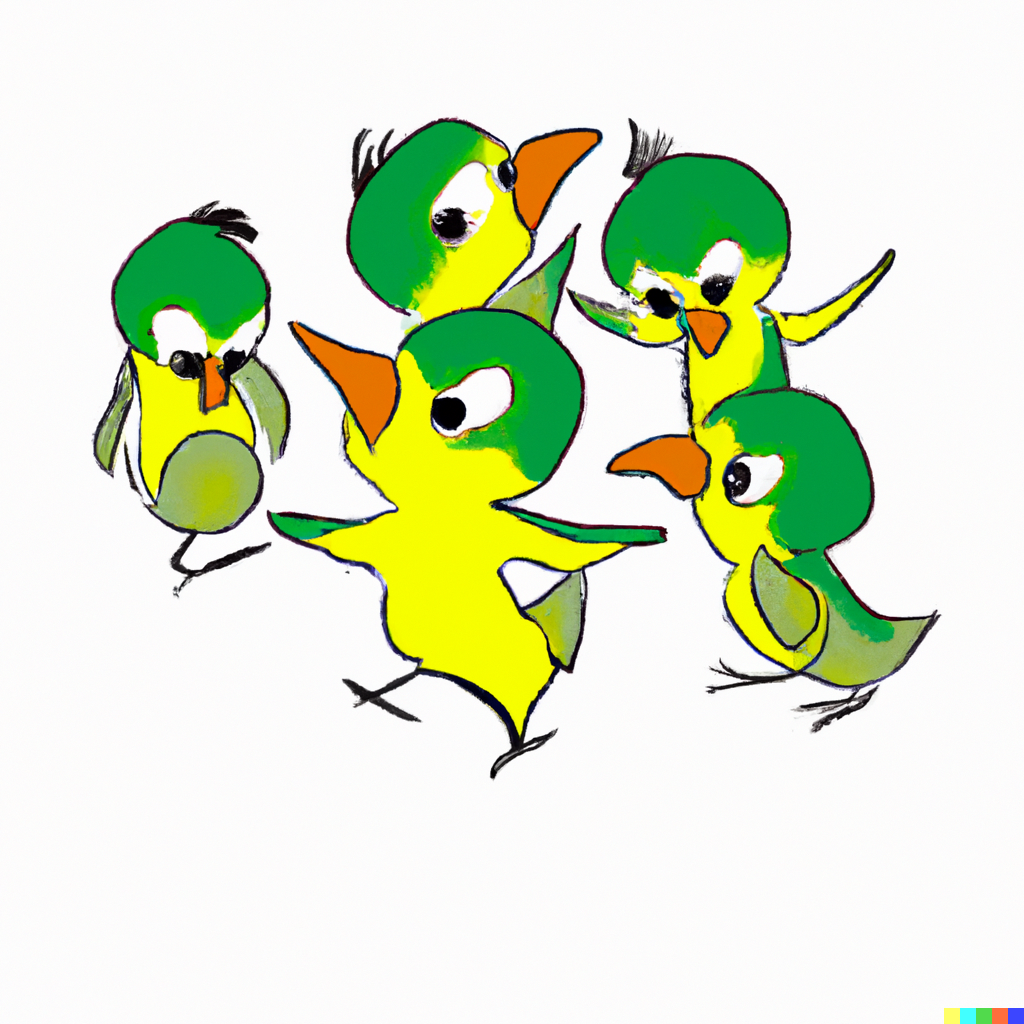

Threat: YELLOW (Sympathetic)
When the Feather-O-Meter™ shifts to YELLOW, we can experience the typical fight-or-flight response.
Fight:

Flight:


In the interaction below, click on YELLOW to see how YELLOW feather mode affects the whole body.
From the training The S.E.C. Check™ via knowledgecompounding.com
Sympathetic activation triggers fight-or-flight responses and floods the body with cortisol and adrenaline. It can lead to feelings of overwhelm, anxiety, and anger, as well as disorganized thinking and hypervigilance. YELLOW helps with short-term (immediate) survival. YELLOW limits our ability to problem-solve and limits our ability to focus on social engagement, learn, and more.
Fight-or-flight on hold (YELLOW-RED):
One of the YELLOW-RED blends is what we call a fight-or-flight on hold response. It mixes the energy and agitation of YELLOW with the immobilization of RED. Kozlowska and colleagues describe this response as fight-or-flight on hold.
This response can be called:
- Freeze
- Fight-or-flight on hold
- LOCK (per Kozlowska et al)
- Freeze state of defense (per polyvagal theory)
- Freeze for action
Safe: Blended State GREEN-RED
(The safety and connection of GREEN plus some immobilization)
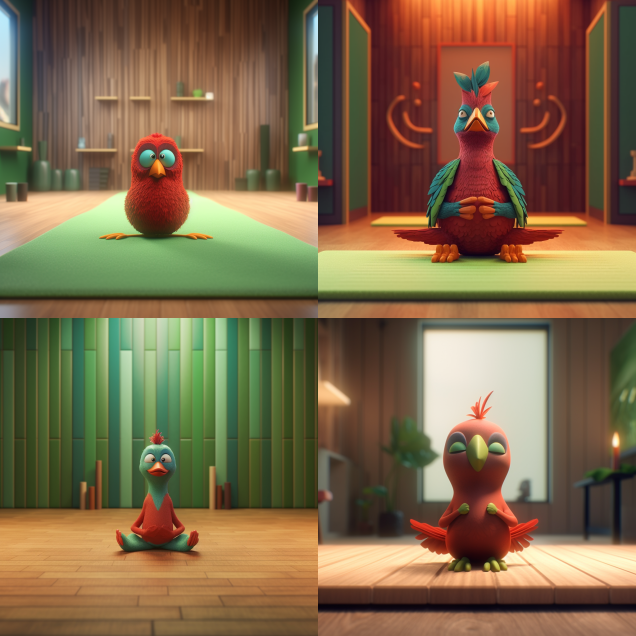
From the training The S.E.C. Check™ via knowledgecompounding.com
Threat: RED (Dorsal Vagal)
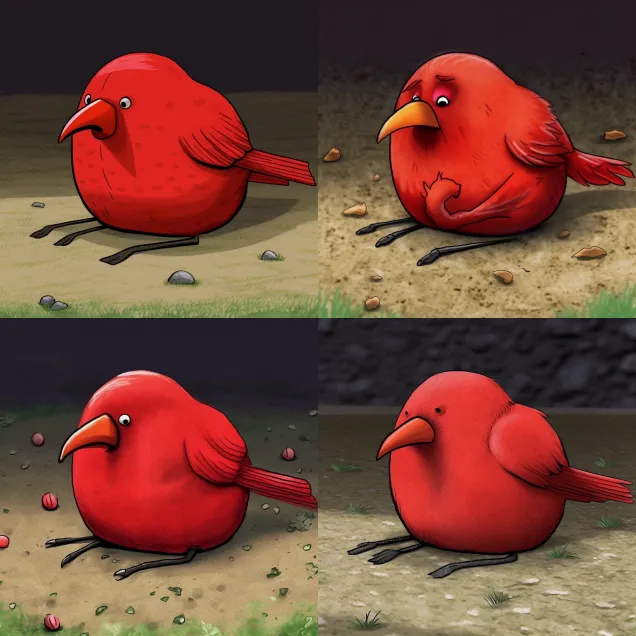
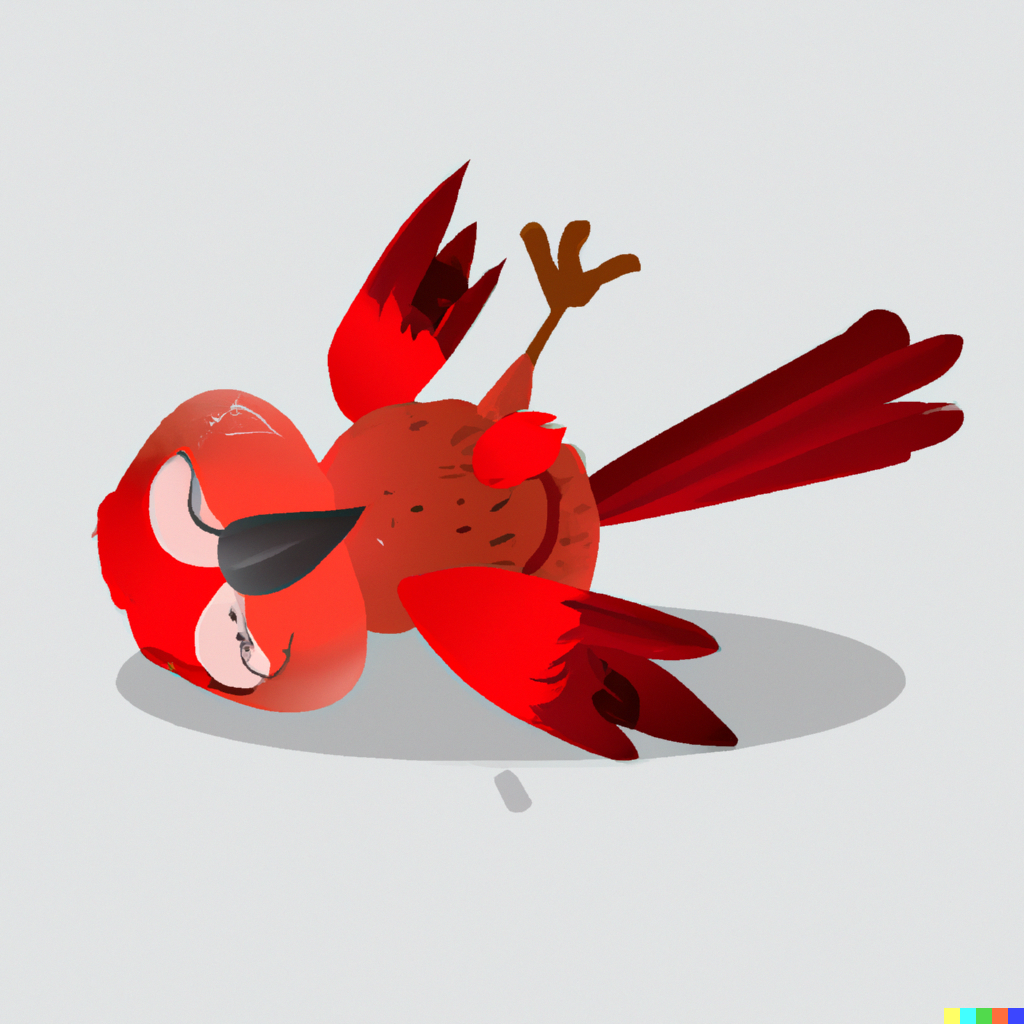
Disappear. RED is an immobilized threat-based physiology. If the nervous system deems that the mobilized threat-based response (YELLOW) isn’t working, it shifts to the immobilized threat-based response (RED), characterized by shutdown, collapse, and immobilization. This is extreme energy conservation. RED can lead to feelings of hopelessness and disconnection.

Collapsed immobility and then tonic immobility are extreme reactions that occur when faced with an unavoidable danger after all other attempts at active defense have been unsuccessful. Both of these are dorsal vagal nervous system responses. Both thus are RED.
Neuroception – Co-Regulation
Neuroception preceded perception. Neuroception is our nervous system’s way of deeming a person, situation (internal or external… interpersonally, etc) as “threat” or “safe.” One thing we can do for each other is to do our best to show up in GREEN and give off the cues of safety and connection. Check out this “When their storm meets our calm,” from NorthStarPaths.com.
Many (if not most) people today are struggling to regulate their nervous system and access the GREEN, ventral state. But, being able to anchor oneself in ventral vagal can be a superpower that allows us to help co-regulate others.

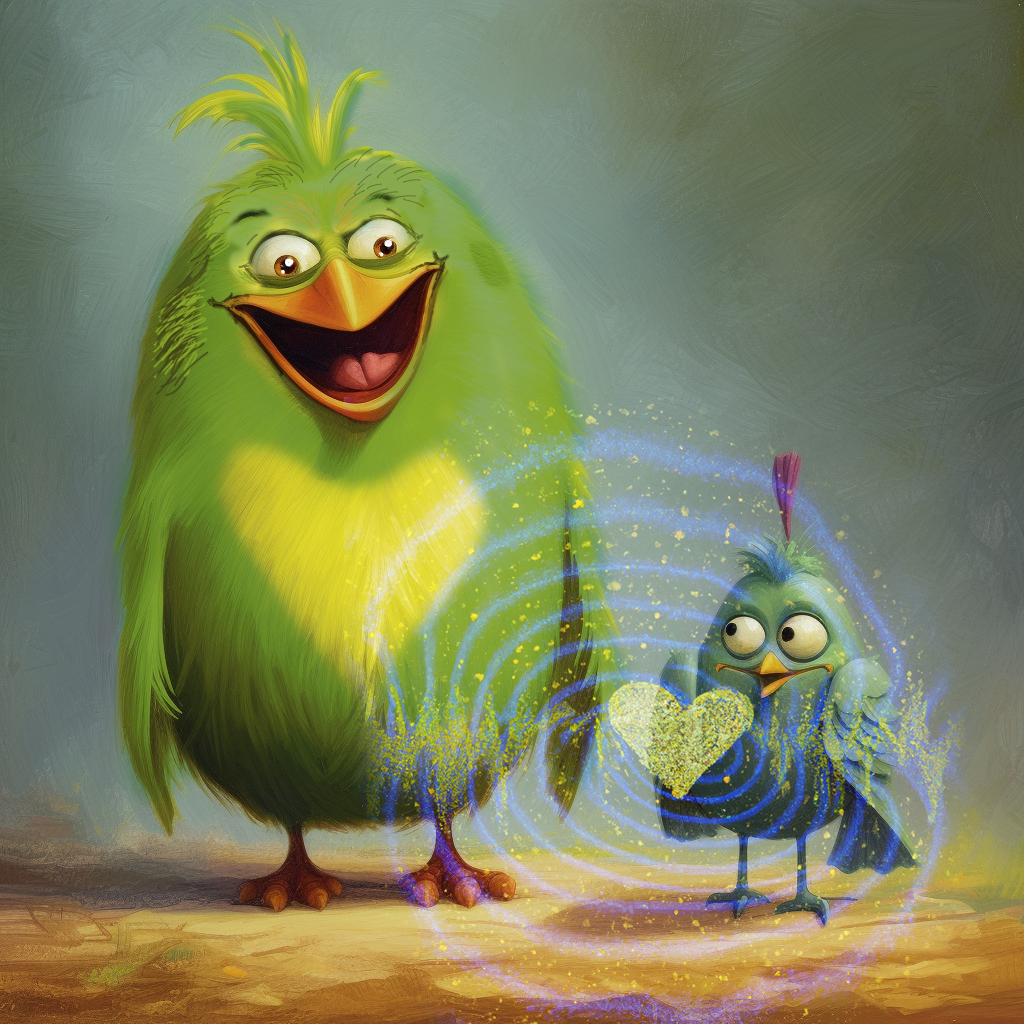
It’s important to note that while these states have physiological underpinnings, they also encompass psychological and behavioral aspects. What is the story about the world when we are in GREEN feather mode vs YELLOW, etc.? What mindset is available? What kinds of thoughts do we have? What emotions are available to us? Using the birds helps to portray an accurate picture.
One time I was in front of a group, teaching The S.E.C. Check™ with the Feather-O-Meter™, and I was second-guessing myself. Someone high up in talent leadership at her organization was there, and I was thinking, oh my gosh, why am I showing the feathers? As it turns out, that was her favorite part of the program. She came up to me after to tell me.
What helps get you to GREEN? Breath work: Typically, 5-7 sec for the in-breath and 5-7 sec for the out-breath will help sync your heart and nervous system; breathe in through the nose, expanding your belly, and breathe out the mouth like blowing through a straw. Studies show slow breathing boosts vagal activity (measured through heart rate variability) during practice, right after a session, and after weeks of practice.
GET CERTIFIED!
Take our accredited course called The S.E.C. Check™.
The Science Behind the Feather-O-Meter™
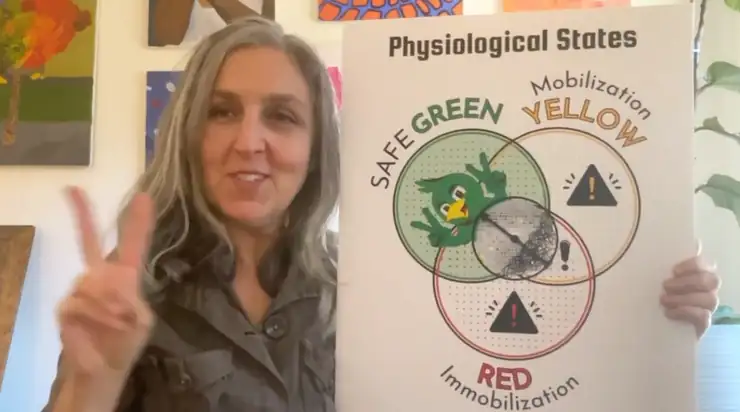
The Feather-O-Meter™ is based on physiology, neurobiology, and the Polyvagal Theory. The image below really captures Polyvagal Theory well.
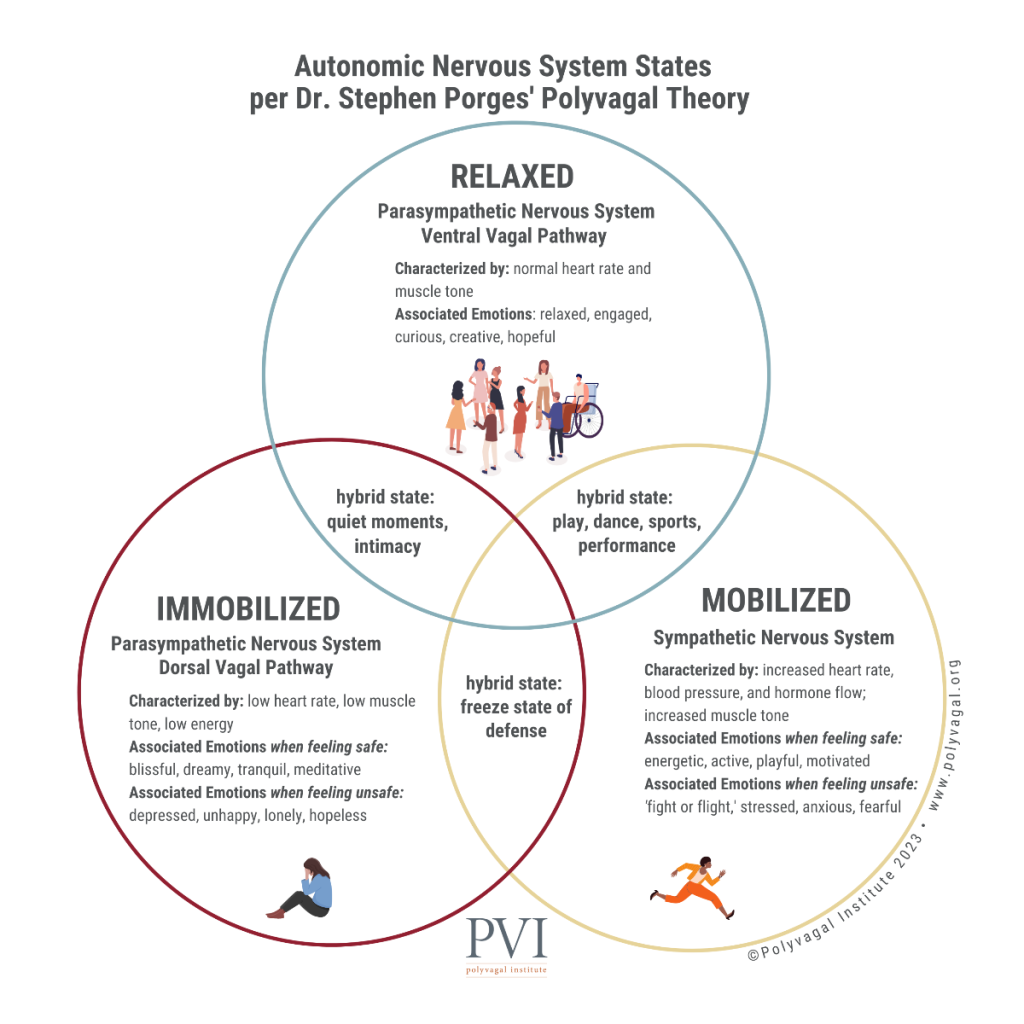
Most of the American workforce is chronically stuck in YELLOW feather mode. And that’s why the Feather-O-Meter™ came to be. If you clicked around above, you would have seen that in YELLOW feather mode, the smarty pants brain is getting diminished blood flow. So knowing that my audience wasn’t getting oxygen to their smarty pants brain, I knew that if I started talking science, they wouldn’t be able to really take it in. (I have my B.S. in biochemistry. I’m one of the weirdos who actually loved organic chemistry, and I’m also a certified brain health coach.)
So that’s why I wanted to make it easy and fun, so that everyone could actually appreciate the beauty of their biological spacesuit and how it’s trying to help them, and also be able to learn how to spot their state and learn how to navigate their biological spacesuit to GREEN feather mode.
The goals I always recommend are to (1) know how to get to GREEN in the moment, and (2) get GREEN to be your biological spacesuit’s home base.
The Feather-O-Meter™ might sound silly, but take a look at this image. Congratulations: You now understand more about the body’s threat-and-safety responses than a lot of people with advanced degrees.
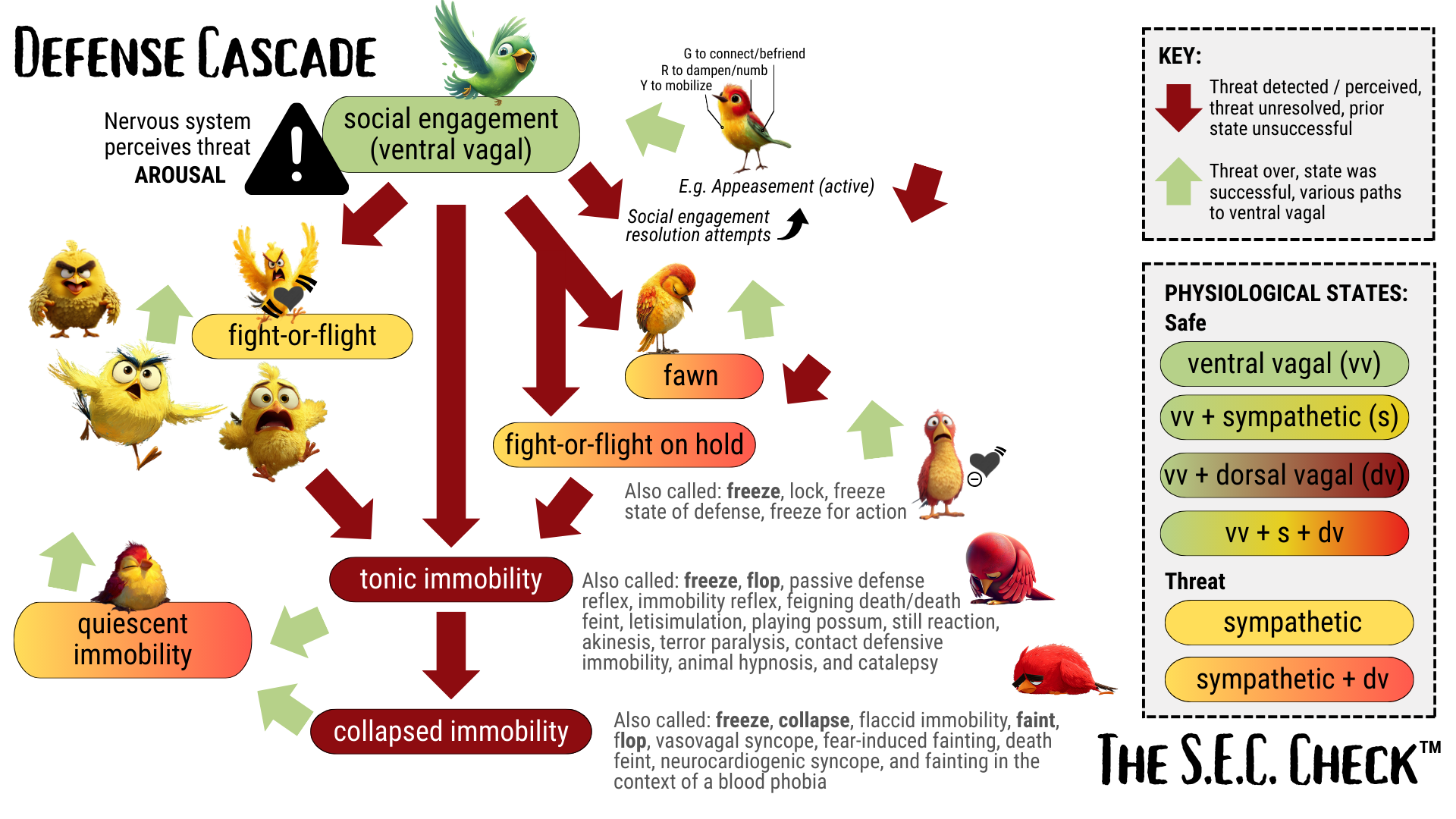
Recommended reading on the different varieties of freeze: trauma as a response of fear and freeze reinterpreted (NY Counseling Services).
References
- The Polyvagal Theory: Neurophysiological Foundations of Emotions, Attachment, Communication, and Self-Regulation by Stephen W. Porges
- Our Polyvagal World: How Safety and Trauma Change Us by Stephen W. Porges and Seth Porges
- Fear and the Defense Cascade: Clinical Implications and Management by Kasia Kozlowska, Peter Walker, Loyola McLean, and Pascal Carrive
- Effects of Voluntary Slow Breathing on Heart Rate and Heart Rate Variability: A Systematic Review and a Meta-Analysis by Sylvain Laborde and colleagues
This post is polyvagal-informed (Polyvagal Institute) and IFS-informed (IFS Institute).