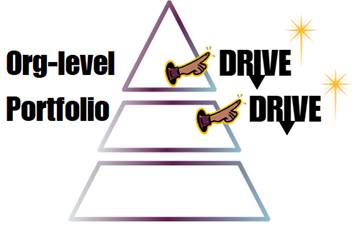
As you fill out your application, every example must reflect the portfolio-level mindset. Whether the prompt is about strategy, governance, value, risk, or communications, the response must show how you made decisions (and recommendations) that affected the portfolio (and its success) as a whole. That means shaping or applying governance structures, balancing risk and reward at the portfolio level (strategic risk management), adjusting the component mix based on strategic change (e.g. change in the org’s strategic plan), managing value delivery and performance at large, or coordinating communication at the portfolio level. If the story stays at the component level or sounds execution-focused, it likely won’t meet the bar.
Anchor every response in outcomes.
What changed in the portfolio because of what you did? What strategic goals or constraints were at stake? Did you shift resources, adjust the component mix, re-align delivery, or influence portfolio-level decisions? Outcomes (results) are the evidence that your actions mattered at the portfolio level. What strategic goals were at stake? What changed in the portfolio because of what you did? Always get to how it helped the portfolio deliver value.
Avoid generic descriptions.
PMI rejects statements that read like a job description. “I led planning sessions” or “I managed intake” isn’t enough. You need to explain the specific situation, what you did, and how it impacted the portfolio. For example: “Redesigned the intake process using a scoring model to improve alignment and eliminate low-value requests.” They want concrete, situation-specific actions and decisions.
Use PMI terminology and back it with specifics.
The language you use should reflect the PfMP standard. Use terms and tools that map directly to the ECO and The Standard for Portfolio Management. Always say how you applied them in your context and how that helped (delivered results). Examples by domain:
- Strategic Alignment (Roadmap): strategic alignment, component sequencing, component mix, optimized/balance portfolio, interdependency analysis, prioritization criteria, trade-off analysis, roadmap updates, what-if analysis, scenario analysis, component scoring models, strategic alignment analysis
- Governance: governance model, decision rights, escalation thresholds, approval criteria, governance boards, layers/tiers of governance, change control board, governance framework, gates/screens, governance plan (or portfolio management plan with a section addressing governance), delegation of authority, strengthening governance (governance is also subject to continual improvement, right-sizing governance
- Value (Continuous Progress): benefits realization, value delivery metrics, continuation/termination decisions, value contribution analysis, adjusting component mix, KPIs, value scoring, balanced scorecard, dashboard with value indicators
- Risk: aggregate risk exposure, risk tolerance, risk register, opportunity management, risk categorization, portfolio-level risk register, dependency risk analysis, risk thresholds, risk response planning, risk policy, risk appetite statement, risk management framework
- Stakeholder Engagement: stakeholder influence, expectation management, stakeholder alignment, communication strategy, stakeholder map, influence grid, RAM/RACI matrix, stakeholder engagement plan, communications management plan, communications matrix
Go one level deeper than your default.
Always go beyond what you did to explain why you did it and how it shaped (and helped!) the portfolio. For example, “Created the roadmap” becomes: “Sequenced components to reflect a shift in business strategy after a vendor delay, which preserved compliance timelines and strategic alignment,” or “I sequenced components to align with shifting regulatory deadlines, which required deprioritizing lower-value items mid-quarter.”
Mention strategic drivers. In a lot of these summaries (if not all) your examples should tie to something bigger—organizational goals/objectives/strategic plan, business drivers, etc. If it doesn’t, PMI will likely read it as execution (tactical) vs a portfolio mgmt mindset (strategic).
Write like you’re talking to a senior executive.
Assume the reviewer doesn’t know your company or your acronyms. Keep the language clean and business-focused. Say exactly what changed because of your work. Make the strategic thinking visible and the portfolio context obvious. If you did more than portfolio management (e.g. you also managed a program or project) — do not mention it. Focus only on portfolio management. That being said: It is okay to include (if relevant) your involvement in the practices of:
- Continual improvement
- Knowledge management
- Organizational change management
0 Comments