A lot of well‑meaning but misinformed people spread notions along the lines of “Slay your inner dragons,” “Conquer your saboteurs,” “Kill the ANTs,” or “Ego is the enemy.” This language
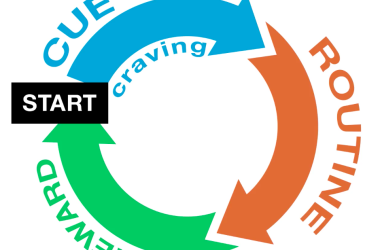
Habits are hardwired into our brains, making them helpful/”helpful.” Some habits are truly helpful and they run on autopilot so they don’t use up gobs of brain power. Other habits
“Your parts are never gonna stop trying to help you, so you may as well make sure they are helping you.” – Jessika Jake NO TO: Kill the ANTS (automatic
We are all very versed in what distraction is, but how often do we stop and think about the opposite of distraction: TRACTION. Traction gets us moving towards our goals.
Emotional Intelligence (EI) is often depicted in four key quadrants: self-awareness, self-management, social awareness, and relationship management. Back in 2017 Google looked at over 100 teams and they found out
Assessing Imposter Syndrome through an Internal Family Systems (IFS) Lens Thanks to WELCOA’s insightful article Can We (Please) Move Beyond Imposter Syndrome?, I have revisited and updated this post. The
“Personal accountability is never about others, it’s always about me looking in the mirror and making better choices.” John G. Miller The concept of personal accountability and taking responsibility for one’s actions
We’ve all experienced those moments where our thoughts seem to be working against us. Cognitive Behavioral Therapy (CBT) often categorizes these as ‘thought errors’ or ‘cognitive distortions.’ But what if
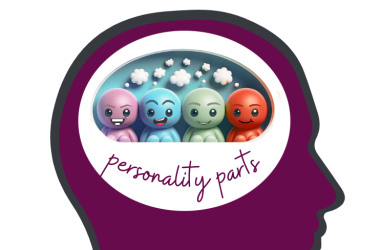
Internal family systems is so easy for a human to understand. We are born with parts. We have an internal family of parts that is guided by “the part that’s
In Part 1, I wrote about some of the different ways we address multiplicity of mind: These days I like to consider the term “human” being as: The biological spacesuit