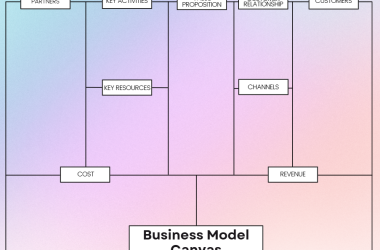
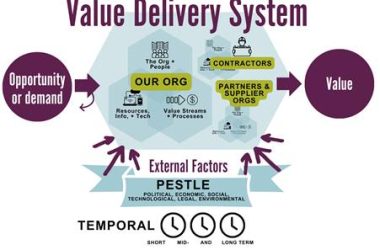
A business model explains how value is created, delivered, and captured. It describes how an organization meets customer needs in a way that is financially viable. This includes how revenue
An operating model defines how an organization functions to deliver on its strategy and business model. It’s not the same as structure or process—it’s the full architecture of how decisions
At the organization level, strategy is the set of choices about where to play, how to win, and what capabilities to build. The enterprise business model gives up the picture
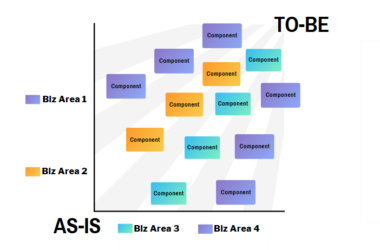
PMI recommends using an “as-is” to “to-be” visual to illustrate — at a high level — how the portfolio aligns with the organizational strategy and objectives. It’s an integrated view
An enterprise-level business model converts strategic choices into how the enterprise will create, deliver, and capture value. Strategy tells the organization which customers and needs to prioritize and which competitive stance
A portfolio vision defines what the portfolio (which will consist of set of components, e.g. projects), should achieve for the organization. The vision states the long-term purpose of the portfolio,
Strategy is the broad approach the org takes to achieve it’s objectives. Tactics enact the strategy. Ops are the day-to-day running of the biz, aka business as usual (BAU). To
Portfolio and program managers often start from an ambiguous translation of strategy into work. Research on project portfolio management shows that many organizations treat strategy as a set of broad
Contemporary research converges on a small set of core components that appear across most frameworks, even when terminology differs or when practitioners use tools such as the Business Model Canvas.
In the face of VUCA (Volatility, Uncertainty, Complexity, and Ambiguity), business survival often depends on adaptability and resilience. Adaptability is the ability to adjust when things change. It means being